
Tension Is Where the Energy Lives: How Leaders Work With Polarity Instead of Against It
Every leadership team I work with is navigating polarities.
Sprint versus stamina. Innovation versus governance. Go alone versus go together. Most leaders treat these as problems to solve. Get through the conflict, find the compromise, move on. But managing leadership tension isn't about resolution. It's about understanding what each side is protecting, and building from there.

Visual Notes: Tension is where the energy lives
We can't escape tension.
It's in the news, our social feeds, our strategy sessions, and our creative briefs. Most of us treat it like a problem to solve. Get through it, smooth it over, find the compromise, move on.
What if that's exactly wrong?
For the past seven months, I've been studying facilitation with an incredible group of coaches and practitioners led by Diane Musho Hamilton. One idea keeps sticking:
Conflict isn't necessarily bad.
Here's why that reframe matters. Energy flows most fluidly between two opposing points. Tension isn't a sign that something is broken. It's a sign that something is alive.
Every meaningful problem is, at its root, a tension that needs to be worked through.
Tension is where the energy lives.
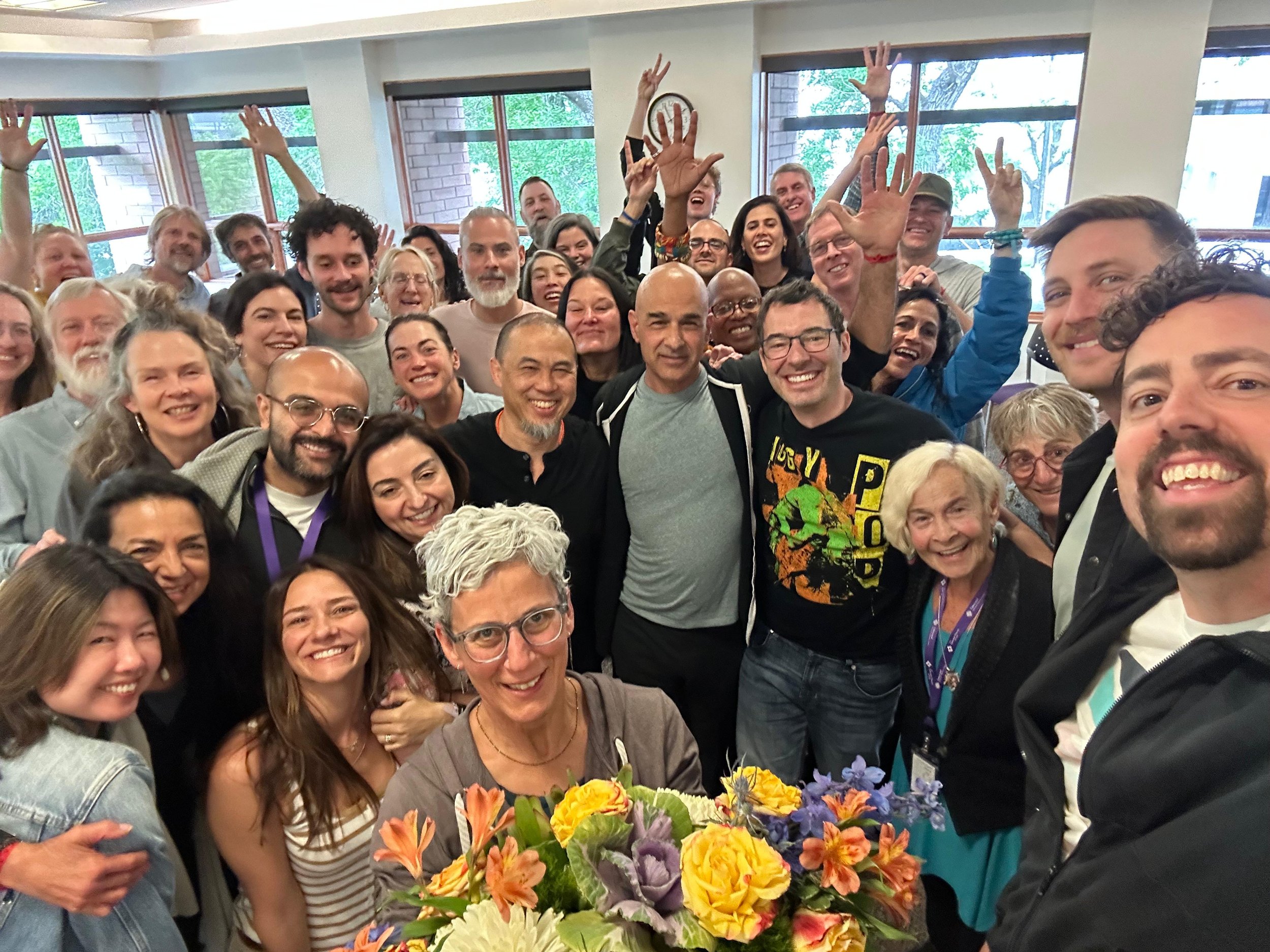
Real LIFE Facilitation Group - Salt Lake City, UT May 2026
The polarities every leader knows:
Every leadership team I work with is navigating some version of the same thing. The specific content changes. The underlying structure doesn't.
Sprint versus stamina. The team pushes hard to hit the deadline, burns through reserves, and pays for it for the next two quarters. Both the urgency and the sustainability are real. Both matter. Choosing one and ignoring the other doesn't make the other go away.
Innovation versus governance. Move fast and learn, or slow down and protect. One group is protecting the future. The other is protecting the organization. Both are right. Both are partial.
Go alone versus go together. This one is everywhere right now. Individual contributors who can move quickly and make clean decisions versus a culture that believes nothing lasting gets built without collective ownership. Speed versus durability. Autonomy versus alignment. The leaders who pretend this polarity doesn't exist in their teams are the ones most caught off guard when it surfaces.
These aren't problems with solutions. They're polarities. And polarities don't get resolved. They get managed, understood, worked with.
What effective facilitation actually does
When disagreement surfaces, most people rush toward resolution. Effective facilitation does the opposite.
First, open the dialogue and surface the real issues.
Then explore what's shared and what differs, until people feel genuinely seen and heard.
Next comes the counterintuitive part: amplify the differences. Get curious about what each side is protecting. Ask better questions. Look for the partial truth in the position that feels most wrong.
Sometimes this creates “a flip.” A moment when someone suddenly understands a perspective that felt impossible five minutes earlier.
The phrase that's stayed with me: Every perspective is true. Every perspective is partial.
Helping people feel seen builds respect. Respect creates the conditions for curiosity. Curiosity is where new ideas live.
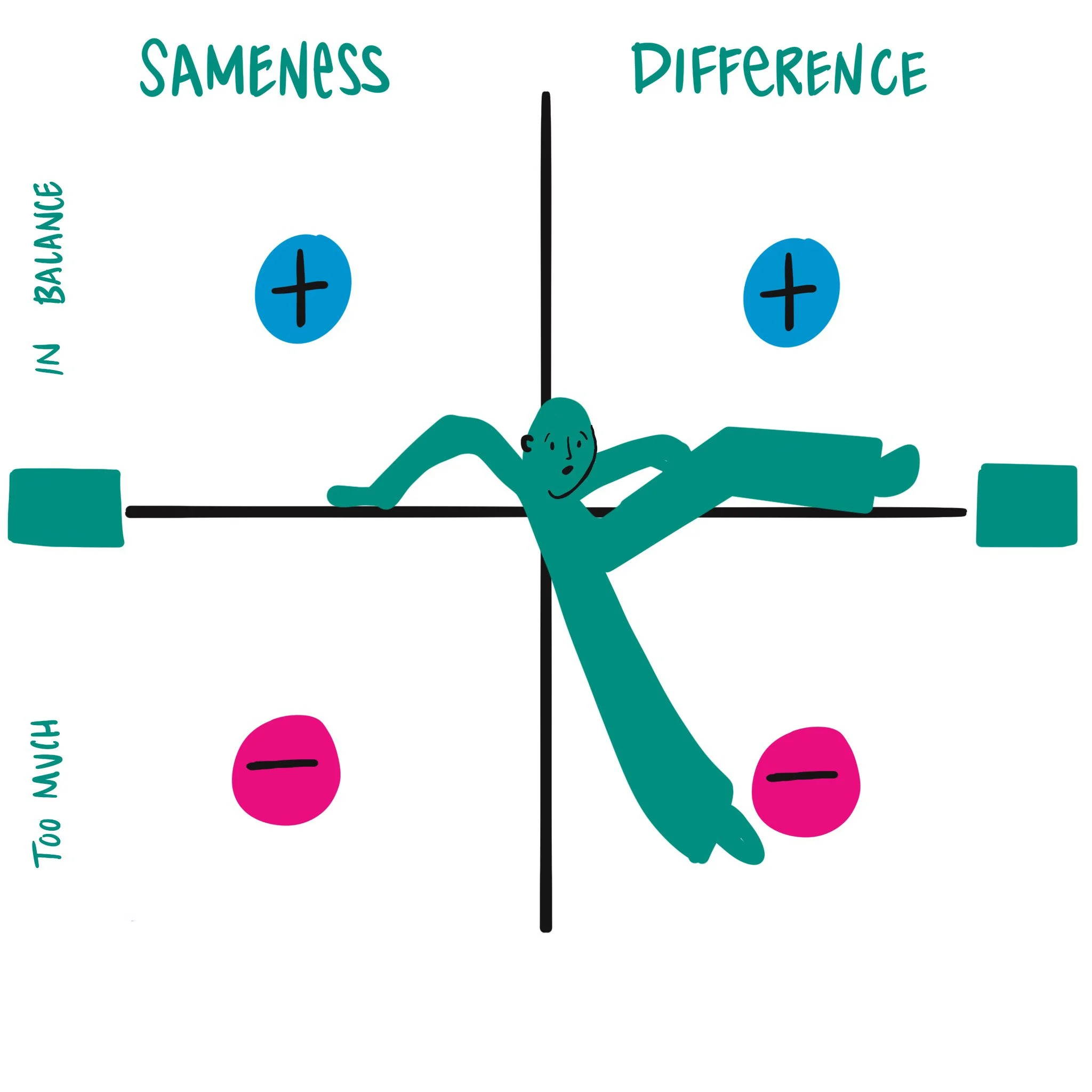
Template: Polarity Matrix
The Polarity Matrix
Our minds default to twos. Right or wrong. Good or bad. This or that.
When you introduce a third or fourth perspective, something shifts. The conversation becomes less about winning and more about understanding. You start to see how opposing ideas can support each other. A more robust solution becomes possible. Not despite the tension, but because of it.
The Pathway Through Conflict
A client recently found themselves wrestling with an AI initiative. One group wanted to move fast, experiment, learn by doing. Another wanted stronger governance and clearer policy before moving forward. They treated it as a conflict. But the real question wasn't who was right.
One group was protecting innovation. The other was protecting responsibility. Both were true. Both were partial.
The breakthrough came when they stopped trying to win the argument and started asking what each side was protecting. Once they could see the polarity, they designed a path that held both: experimentation and accountability, running in parallel.
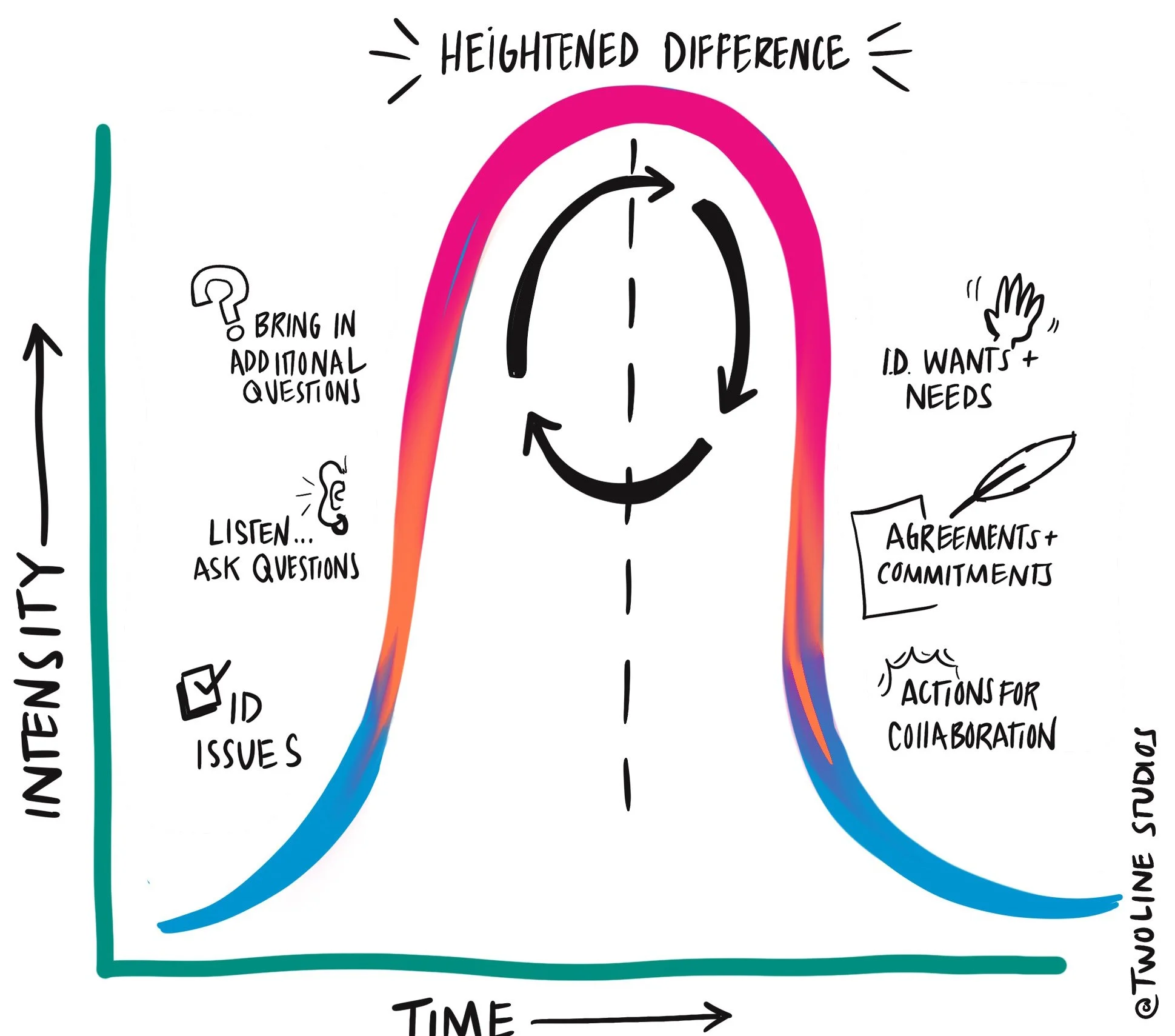
Model: Pathway Through Conflict
Where is tension showing up for you?
Not as a rhetorical question. A real one.
Where is your team sprinting when it needs to pace?
Where is someone going alone when the work actually requires everyone?
Where is the push for innovation running headlong into the people whose job it is to protect the organization?
Those aren't failures of leadership. They're signs of a living system.
The tension didn't need to go away. It needed to be understood.
At TwoLine Studios, we design immersive experiences, graphic facilitate and our founder, Heather Willems, coaches leaders to reflect on big ideas and put those ideas into action.